In the world of precision manufacturing, understanding the differences between CNC turning and CNC milling is crucial. According to industry expert John Smith, "CNC turning creates cylindrical parts, while CNC milling is perfect for flat surfaces." This statement captures the essence of the two processes and highlights their unique capabilities.
CNC turning involves rotating the workpiece against a stationary cutting tool. This method excels at producing items like shafts and rings. In contrast, CNC milling uses a rotating tool to cut the workpiece. It is ideal for intricate shapes and complex geometries. Both processes serve specific purposes in the manufacturing landscape, yet many still wonder, "what is the difference between CNC turning and CNC milling?"
Recognizing these differences can optimize design choices. Each method has strengths, making it important to choose wisely. However, the distinction is not always clear-cut. Occasionally, projects can benefit from both processes, leading to potential confusion. Understanding the nuances ensures better results, tailored to specific needs.
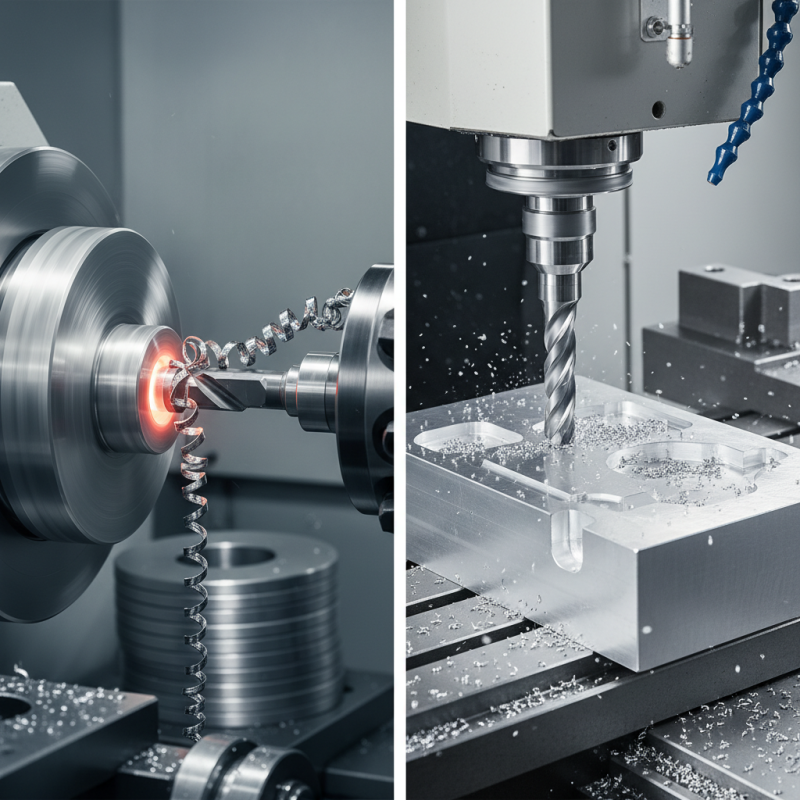
Understanding CNC Machining: An Overview of Turning and Milling
CNC machining is vital in modern manufacturing. It encompasses various techniques, including CNC turning and CNC milling. Understanding these methods is essential for choosing the right process for your project.
CNC turning involves rotating a workpiece against a cutting tool. This method is ideal for creating cylindrical shapes. Think of it as shaping a wooden pencil. The lathe machine works by moving the cutting tool along the rotating piece. This technique allows for precision and efficiency, though it may require specialized setups for complex geometries.
On the other hand, CNC milling employs a different approach. It uses a stationary workpiece while the cutting tool moves around it. Imagine cutting a cake into precise slices. This method enables the creation of intricate shapes and detailed features. While milling is versatile, it sometimes struggles with deeper cuts.
Identifying the right method for your needs can be challenging. Assessing factors like material type and design complexity is crucial. Each process has its strengths and limitations, highlighting the need for expertise in CNC machining.
Defining CNC Turning: Processes and Applications
CNC turning is primarily focused on rotating workpieces against a stationary cutting tool. This process is ideal for producing cylindrical shapes. According to recent industry reports, CNC turning accounts for approximately 25% of total CNC machining usage. It is widely employed in automotive and aerospace components that require high precision.
Common applications include shafts, bushings, and bolts. The speed and efficiency of CNC turning make it suitable for high-volume production. However, complexities arise with intricate designs or unexpected materials. Operators may encounter challenges ensuring consistent quality and dimensional accuracy. This aspect highlights the need for skilled technicians who can troubleshoot and adapt in real-time.
Data showcases that CNC turning can achieve tolerances of up to ±0.005 inches, making it a reliable choice for critical parts. Still, certain limitations exist compared to CNC milling. Turning may struggle with creating complex geometries or features. In such scenarios, understanding the strengths of each method is crucial for optimal production outcomes.
CNC Turning vs. CNC Milling: A Comparative Analysis
Exploring CNC Milling: Techniques and Uses
CNC milling is an essential technique in the manufacturing industry. It involves removing material from a workpiece to create desired shapes. The milling process utilizes a rotating cutting tool, which moves in multiple directions. A report by the International Federation of Robotics noted that global demand for CNC machines is expected to reach $80 billion by 2025. This surge is driven by the growing need for precision parts in various sectors.
Milling can create complex geometries. It excels in producing intricate parts, such as those found in aerospace and automotive industries. One study in the Journal of Manufacturing Processes revealed that CNC milling ensures high precision, with errors often below 0.01 mm. Despite its advantages, milling can be inefficient for larger volumes.
Tips for effective CNC milling:
• Select the right materials. Use lightweight composites when possible to reduce strain on machinery.
• Ensure your cutting tools are sharp and appropriate for the workpiece material.
• Consider the cooling mechanisms used during milling. Effective cooling can prolong tool life and enhance machining accuracy.
• Aim to regularly assess the performance of your milling process. Continuous improvement leads to better outcomes and higher quality parts, minimizing potential waste.
Key Differences Between CNC Turning and CNC Milling
CNC turning and CNC milling are two crucial processes in modern manufacturing. Understanding their differences is essential for optimizing production efficiency. CNC turning is typically used for creating cylindrical parts. This method involves rotating the workpiece against a stationary tool, allowing for precision in achieving round shapes. In contrast, CNC milling utilizes rotational tools to cut away material from a stationary workpiece. This process is more versatile, enabling the creation of complex shapes, including flat surfaces and contours.
Industry reports indicate that the CNC machining market is expected to grow significantly. By 2025, it is projected to reach a value of over $100 billion, with both turning and milling contributing to this growth. The choice between these methods often depends on the design requirements. For instance, CNC milling might be preferred when intricate details and slow feed rates are necessary, while turning could be more efficient for mass production of simple parts.
One challenge in differentiating the two processes is the overlap in capabilities. Some CNC machines can perform both functions. This can lead to confusion in selecting the appropriate method for a specific task. Manufacturers should evaluate their needs carefully. They must weigh factors such as material type, required precision, and production volume. This nuanced decision-making is essential for maximizing manufacturing effectiveness.
Choosing the Right CNC Method for Your Project Needs
When deciding between CNC turning and CNC milling, it’s vital to understand your project needs. CNC turning is ideal for cylindrical objects. Parts like shafts or pins benefit from this method. The lathe spins the material, allowing the cutting tool to shape it precisely. This process is efficient for creating symmetrical designs.
CNC milling offers a different approach. Flat and complex shapes come alive under its cut. This method is suitable for producing intricate details. It relies on rotating tools to remove material from stationary parts. However, CNC milling may require more setup time. The range of tools and settings can overwhelm newcomers.
Consider the material and design complexity when choosing. Both methods have their advantages and limitations. For example, a project requiring quick turnaround may favor CNC turning. Yet, projects demanding intricate features might lean towards milling. Understanding these differences can guide successful project outcomes.
How to Identify the Difference Between CNC Turning and CNC Milling?
| Aspect |
CNC Turning |
CNC Milling |
| Process |
Rotates the workpiece against a stationary tool |
Uses a stationary workpiece with rotating tools |
| Ideal for |
Cylindrical or round components |
Flat or complex shapes with various features |
| Tool Movement |
Linear movement along the Z-axis |
Multi-axis movement (X, Y, Z) |
| Material Removal |
Removes material from the outside edge |
Can remove material from various angles and depths |
| Typical Applications |
Shafts, bolts, and other cylindrical parts |
Brackets, housings, and complex components |
| Production Speed |
Generally faster for cylindrical parts |
May be slower due to increased complexity |
Conclusion
CNC machining encompasses various processes, with CNC turning and CNC milling being two of the most common methods used in manufacturing. CNC turning involves rotating the material on a lathe while cutting tools remove excess material to shape the workpiece, making it ideal for cylindrical parts. Conversely, CNC milling utilizes rotating cutting tools to remove material from a stationary workpiece, allowing for the creation of complex shapes and features.
In understanding what is the difference between CNC turning and CNC milling, key distinctions arise in their processes, applications, and suitability for different project requirements. CNC turning is primarily used for producing round objects, whereas CNC milling is better suited for flat, intricate designs. Ultimately, choosing the right CNC method depends on the specific needs of your project, including part shape, size, and production volume.

 Robotic CNC