How Long Does CNC Machining Take for Custom Parts?

Time:2026-10-18 Author:Liam
0%

When asking “how long does CNC machining take for custom parts,” many buyers expect one fixed number. In practice, production time depends on design complexity, material, quantity, tolerances, and machine availability. A simple aluminum bracket may require only a few hours of cutting. A stainless steel housing with deep pockets, tight tolerances, and threaded holes can take several days.

The timeline includes more than machine time. Engineers review the CAD model, select cutting tools, create toolpaths, and prepare fixtures. Operators then load the material, run the program, and inspect critical dimensions. A 50-piece order may move quickly after setup, while a one-piece prototype may need extra checks. Surface finishing, heat treatment, shipping, and factory workload can also change the delivery date. Small details matter.

Experience helps, but estimates are never perfect. Even skilled machinists can miss delays caused by tool wear, material shortages, or a revised drawing. That uncertainty deserves honest discussion. Reliable suppliers explain each stage, identify risks early, and provide realistic delivery windows instead of attractive guesses. Customers should share complete drawings, tolerance requirements, quantities, and finishing expectations before requesting a quotation. This article examines the main factors behind CNC machining lead times and shows how to estimate a practical schedule for custom parts. Expect ranges, not promises.
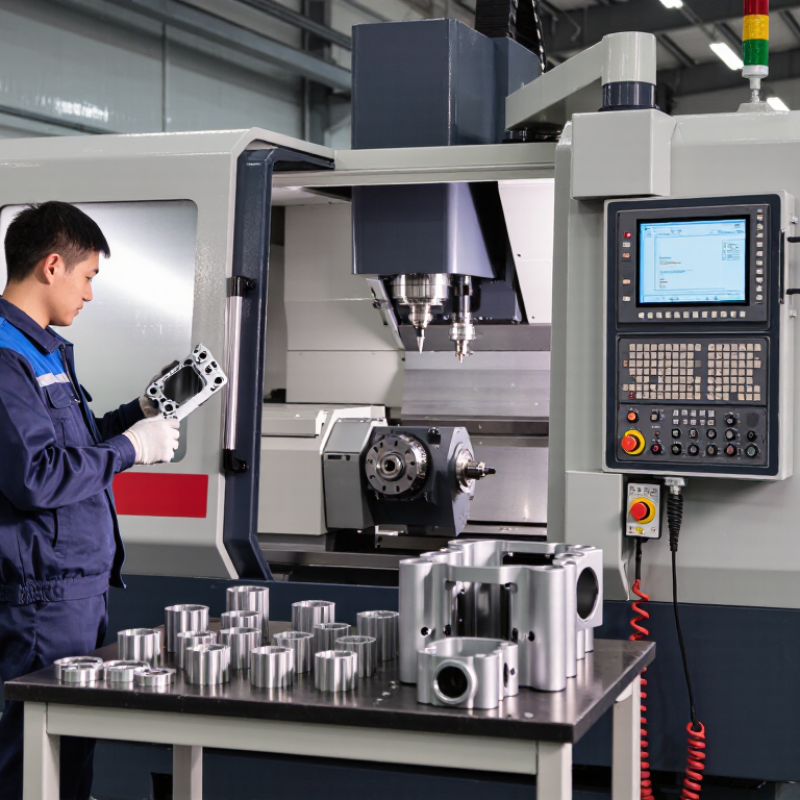
How Long Does CNC Machining Take for Custom Parts?

What Determines the CNC Machining Time for Custom Parts

How Long Does CNC Machining Take for Custom Parts?

CNC machining time depends on more than cutting speed. Material hardness, part geometry, tolerance, and surface finish all influence the estimate. A simple aluminum bracket may require 20 minutes of cutting, while a steel housing with deep pockets may need several hours. Tool changes, workholding, probing, deburring, and inspection also add time.

A 2022 review in the Journal of Manufacturing Processes reported that setup and handling can represent 30–50% of total time in small-batch machining. That range explains why two similar parts may receive different quotations. A five-axis setup can reduce repositioning, but programming and verification often take longer. Tight tolerances below ±0.02 mm require slower feeds, stable temperatures, and more inspection points. The U.S. National Institute of Standards and Technology also identifies reliable process data as essential for accurate manufacturing schedules.

The estimate is never perfect. Drawings may hide difficult internal corners or weak clamping areas. In practice, I would separate cutting time from preparation and inspection time. For example, a 45-minute machining cycle may become a two-hour job after three setups and first-piece approval. Batch size matters too. One prototype carries the full programming burden, while ten parts spread that effort. Scrap risk, tool wear, and material availability can still change the final lead time.

How CNC Machining Time Is Calculated Step by Step

How Long Does CNC Machining Take for Custom Parts?

How CNC Machining Time Is Calculated Step by Step

CNC machining time starts with the cutting path, not the part’s outside dimensions. The basic formula is toolpath length divided by feed rate. A 1,200 mm path at 600 mm per minute requires two cutting minutes. Add rapid movements, tool changes, probing, and coolant clearance. Five tool changes at 20 seconds each add nearly 1.7 minutes. A probing routine may add another minute.

Setup time often changes the estimate more than cutting time. Operators load stock, align the fixture, set work offsets, and verify the first toolpath. A simple setup may take 30–60 minutes. Complex multi-face work can take several hours. ISO 22400-2 separates machining, setup, waiting, and downtime when defining manufacturing performance. That distinction matters. Otherwise, a “10-minute part” can occupy a machine much longer.

Batch size also changes the calculation. One part carries the full setup burden. Fifty parts spread that time across the order. The U.S. National Association of Manufacturers reported in 2023 that 77% of manufacturers faced worker recruitment or retention challenges. Scheduling can therefore include inspection queues and operator availability, not only spindle time. NIST guidance on measurement uncertainty supports leaving tolerance for variation. My estimates are rarely perfectly clean. Material hardness, tool wear, and a cautious first-piece prove-out can still add unexpected minutes.

Typical Production Times for Different Custom Part Types

Typical production times depend on part geometry, material, quantity, and inspection requirements. A simple CNC-turned spacer often takes two to five business days after drawing approval. Small aluminum brackets usually need three to seven business days on a three-axis mill. These estimates include programming, setup, machining, deburring, and basic dimensional checks. They do not include design revisions.

Complex housings, deep pockets, or tight-tolerance components commonly require seven to fifteen business days. Five-axis work may take longer when the fixture needs careful alignment. Steel and titanium also cut more slowly than common aluminum alloys. For batches of 50 to 500 pieces, production may run from one to four weeks. The first article can add time. It reveals problems early.

In practical quoting, the machine cycle is only part of the schedule. Material availability, tool changes, surface finishing, and final inspection can shift delivery dates. A drawing with unclear datums may create a full-day delay. I have seen a small thread note trigger new programming and inspection work. That is easy to miss. For reliable timing, provide a complete CAD model, tolerances, material grade, quantity, and finish requirements. Even then, leave a small buffer. Real production is rarely perfectly linear.

How Long Does CNC Machining Take for Custom Parts?

Typical production time is shown in calendar days and includes programming, setup, CNC machining, inspection, and standard finishing. Simple prototypes may take around 1–3 days, while complex geometries and tight-tolerance parts generally require more programming, multiple setups, and additional inspection.

Factors That Can Increase or Reduce Machining Time

Custom CNC machining time depends on more than the minutes spent cutting metal. A small aluminum bracket may require only a short machining cycle, yet preparation can take longer. Engineers must review the drawing, select suitable tooling, create toolpaths, and secure the material. It sounds simple. In practice, material hardness changes cutting speeds and tool life. Hard steels and titanium usually need slower passes, stronger tools, and more frequent checks.

Part geometry can increase machining time quickly. Deep pockets may require several tools and careful chip removal. Thin walls can deform under cutting pressure. Tight tolerances also demand slower finishing passes and additional measurements.

A standard hole is quick to produce, while a complex hole pattern may require repositioning the part. Each extra setup adds handling time. Fixture design matters more than many customers expect.

Quantity can reduce the average time per part because programming and setup costs are shared. However, prototypes often take longer because engineers adjust dimensions after the first inspection. Surface finishing, deburring, heat treatment, and detailed inspection add separate production stages. From shop-floor experience, a reliable estimate includes material availability and machine scheduling, not only spindle time. Yet estimates can still be wrong. A revised CAD file, damaged tool, or difficult-to-hold tolerance can change the schedule overnight. Reviewing past jobs helps, but no estimate is perfect.

Ways to Plan and Shorten the CNC Manufacturing Schedule

How Long Does CNC Machining Take for Custom Parts?

Ways to Plan and Shorten the CNC Manufacturing Schedule

A custom CNC project often takes three days to several weeks. The exact schedule depends on geometry, material, quantity, and inspection requirements. Simple aluminum brackets may move quickly through production. Tight-tolerance steel housings usually need more setup and verification.

Send complete CAD files, drawings, material specifications, and surface-finish requirements with your inquiry. Missing details create delays during quoting and engineering review. Clearly mark critical dimensions and acceptable tolerances. A machinist can then identify difficult features before programming begins.

Design for standard tools whenever possible. Deep narrow pockets may require special cutters and extra machining time. Rounded internal corners can reduce tool changes. Combining similar parts into one batch may also improve machine efficiency. However, this is not always better for quality. I have seen larger batches expose small fixture errors across every part.

Ask for a production schedule that includes programming, material purchasing, setup, machining, inspection, and shipping. Leave room for one revision or failed inspection. Rushing this buffer can create expensive rework. Confirm machine availability before approving the order, especially for five-axis work or large components. Early fixture planning can shorten setup time considerably. It may take only an hour to review, but save a full production day.

How Long Does CNC Machining Take for Custom Parts? - Ways to Plan and Shorten the CNC Manufacturing Schedule

Typical planning ranges for prototype and low-volume CNC-machined parts

Project Stage Typical Duration What Usually Happens Main Schedule Drivers Ways to Shorten the Schedule
Design and DFM Review 1–3 business days The CAD model, drawings, tolerances, material, and surface requirements are reviewed for manufacturability. Incomplete drawings, unclear datums, tight tolerances, deep cavities, and difficult-to-machine features. Provide a fully defined 3D model, 2D drawing, material grade, critical dimensions, and inspection requirements.
Material and Tooling Preparation 1–7 business days Material is sourced, cut to size, and checked; standard cutting tools, fixtures, and workholding are prepared. Material availability, special alloys, oversized stock, custom fixtures, and nonstandard tooling. Select commonly available material sizes, approve equivalent grades, and minimize custom tooling where possible.
CNC Programming and Setup 0.5–3 business days Toolpaths are programmed, machining operations are sequenced, workholding is planned, and the machine is set up. Number of setups, multi-axis requirements, feature accessibility, complex geometry, and tolerance strategy. Design parts for fewer setups, use standard tooling, consolidate similar parts, and confirm the machining datum early.
Prototype Machining 1–5 business days The first article or prototype is cut, with tool changes, workholding, deburring, and in-process checks included. Material removal volume, cutting parameters, part size, machine availability, and number of operations. Use rapid-turn scheduling, simplify noncritical features, reduce unnecessary material removal, and submit a manufacturable design.
Inspection and Approval 0.5–3 business days Critical dimensions, visual condition, material certification, and requested inspection records are verified. Quantity of inspection points, tight tolerances, first-article requirements, and measurement equipment availability. Identify only critical-to-function dimensions, use clear tolerances, and agree on the inspection method before production.
Finishing and Secondary Operations 2–10 business days Parts may be deburred, anodized, plated, passivated, heat-treated, polished, or laser marked. Finishing type, batch size, outside processing capacity, masking requirements, and color or appearance standards. Choose standard finishes, specify only necessary cosmetic zones, combine compatible orders, and reserve finishing capacity early.
Packing and Delivery 1–5 business days Approved parts are packed, shipping documents are prepared, and the order is dispatched. Destination, shipping method, export documentation, protective packaging, and delivery service level. Confirm the delivery address and documentation early, and select the required shipping speed before production starts.

Typical Total CNC Manufacturing Schedule

Part Type Typical Total Lead Time Typical Characteristics
Simple 3-Axis Prototype 3–7 business days One or two setups, standard aluminum or steel, moderate tolerances, and no outsourced finishing.
Complex Multi-Setup Part 7–15 business days Multiple orientations, complex pockets, tight tolerances, detailed inspection, or difficult materials.
Part with Special Finish 10–20 business days Machining plus heat treatment, anodizing, plating, passivation, polishing, or other secondary processing.
Small Production Batch 2–6 weeks Repeated machining, inspection, batch preparation, material planning, and possible process optimization.

Planning note: These are practical planning ranges for custom CNC work. Actual lead time depends on part geometry, quantity, material availability, tolerances, finishing requirements, machine loading, inspection scope, and shipping distance.

FAQS

How long does CNC machining take for a simple custom part?

A simple aluminum bracket may need 20 minutes of cutting. Total production often takes three to seven business days. Setup, programming, deburring, and inspection add time.

What factors determine CNC machining time?

Material hardness, geometry, tolerance, surface finish, quantity, and inspection requirements all matter. Tool changes and workholding also affect the schedule. Small details matter.

How is CNC cutting time calculated?

Cutting time equals toolpath length divided by feed rate. A 1,200-millimeter path at 600 millimeters per minute takes two cutting minutes. Rapid moves and tool changes add more time.

Why can a ten-minute machining cycle take much longer?

Setup may require 30 to 60 minutes. Operators must load stock, align fixtures, set offsets, and verify the toolpath. Inspection and waiting can extend the job.

How long do complex housings usually take?

Complex housings may require seven to fifteen business days. Deep pockets, internal corners, and tight tolerances slow machining. Multi-face work may need several setups.

Do tight tolerances increase production time?

Yes. Tolerances below approximately ±0.02 millimeters often require slower feeds and more inspection points. Temperature control may also become important. Precision takes patience.

Does batch size affect CNC machining time?

Yes. One prototype carries the full programming and setup burden. Larger batches spread those costs across many parts. A batch of 50 to 500 pieces may take one to four weeks.

What information helps create a more accurate time estimate?

Provide a complete CAD model, material grade, quantity, tolerances, and finish requirements. Clear datums prevent avoidable delays. Even then, estimates are not perfect.

What unexpected issues can delay a custom part?

Material shortages, tool wear, weak clamping areas, unclear drawings, and first-piece corrections can add time. A small thread note may require new programming. Leave a buffer.

Conclusion

How long does CNC machining take for custom parts depends on several connected factors, including the part’s size, geometry, material, tolerance requirements, surface finish, and total order quantity. Machining time is typically estimated by reviewing the digital design, selecting suitable cutting tools and speeds, calculating material removal and tool changes, and adding time for setup, programming, inspection, and finishing. Simple prototypes may be completed within a few days, while complex parts, larger batches, or highly precise components may require several weeks.

Production schedules can become longer when designs include deep cavities, thin walls, difficult materials, tight tolerances, multiple setups, or special finishing processes. On the other hand, standardized materials, streamlined designs, batch production, and early design reviews can reduce delays and costs. Clear technical drawings, prompt feedback, realistic tolerances, and advance planning help create a more accurate schedule and shorten the overall CNC manufacturing process.

Liam

Liam

Liam is a dedicated marketing professional with a profound expertise in the industry, where he excels at highlighting the unique advantages of our core products. With a keen understanding of market trends and consumer needs, Liam frequently updates our company’s professional blog, providing......