CNC machining is increasingly favored in the manufacturing sector. Recent data shows that the CNC machining market is expected to reach $100 billion by 2026. This growth reflects its efficiency and precision in producing complex parts. When comparing methods, one question often arises: what are the advantages of CNC machining over casting?
CNC machining offers notable precision, achieving tolerances as tight as ±0.01 mm. In contrast, casting processes often struggle with the same level of accuracy. Furthermore, CNC machining minimizes waste material. Reports indicate that it can reduce scrap rates by up to 30%. This efficiency not only lowers production costs but also leads to a more sustainable manufacturing approach.
However, it’s essential to consider potential drawbacks. CNC machining may involve higher initial setup costs. Also, for very high-volume production, casting may still be advantageous due to lower costs per part. Each method presents its own set of challenges. Understanding these factors is key to making informed decisions in project planning.
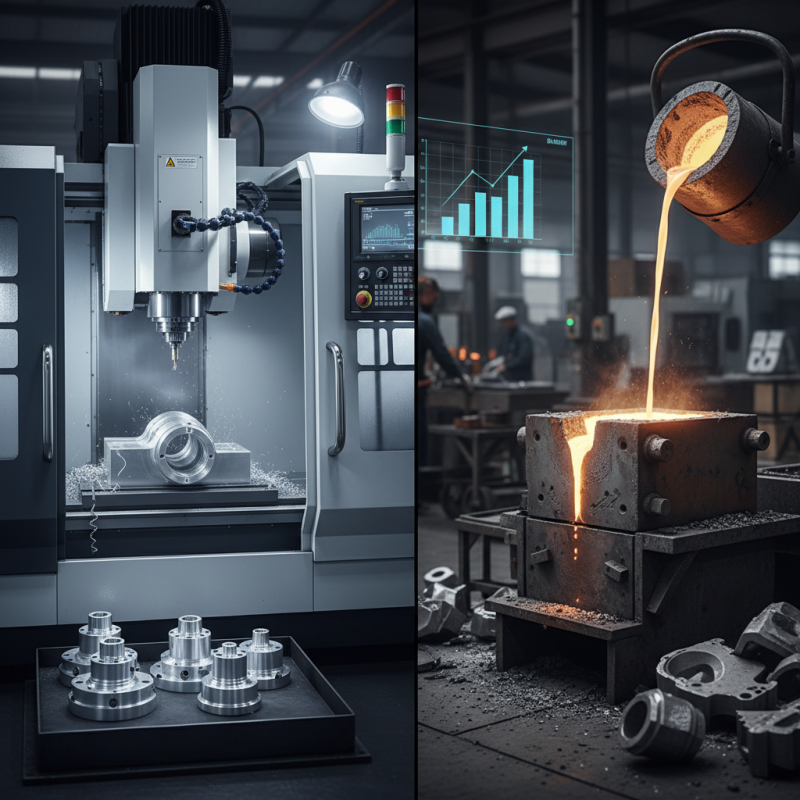
CNC machining offers significant advantages over traditional casting, particularly in precision manufacturing. According to a recent industry report, CNC machining can achieve tolerances as tight as ±0.005 mm. This level of precision is crucial for industries like aerospace and automotive, where even minor discrepancies can lead to severe failures.
The flexibility of CNC machining is another advantage. It allows for rapid prototyping and modifications during the manufacturing process. A study noted that CNC machining can reduce lead times by up to 50% compared to casting. This speed is essential in fast-paced markets where timely delivery gives a competitive edge.
However, CNC machining is not without its challenges. The initial setup costs can be higher than those for casting. Moreover, material waste during the machining process can be a concern. Despite these drawbacks, many manufacturers find that the benefits of precision and reduced time outweigh the initial investment. Efficient production processes often lead to long-term savings, illustrating the complex trade-offs in manufacturing decisions.
| Dimension | CNC Machining | Casting |
|---|---|---|
| Precision Tolerance | +/- 0.001 inches | +/- 0.005 inches |
| Production Speed | Faster (hours to days) | Slower (days to weeks) |
| Material Versatility | High (metals, plastics) | Limited (mostly metals) |
| Waste Material | Lower (subtractive process) | Higher (excess material) |
| Setup Cost | Higher initial setup | Lower initial setup |
| Post-Processing | Minimal required | Significant required |
| Size Capability | Excellent for small to medium parts | Suitable for large parts |
: CNC machining offers tighter tolerances, achieving ±0.005 mm precision, making it ideal for critical industries like aerospace.
CNC machining can reduce lead times by up to 50%, beneficial for fast-paced markets needing quick delivery.
Yes, initial setup costs can be higher, and material waste during machining is a concern that needs attention.
CNC machining excels in intricate designs and rapid prototyping, providing quick turnaround times for testing and adjustments.
Yes, it remains competitive for smaller batches despite higher upfront costs, mainly due to reduced cycle times.
Yes, it is compatible with metals, plastics, and composites, allowing projects to adapt to various requirements.
Consider machinability; some materials, like titanium, are more difficult to work with, impacting time and costs.
Yes, complex geometries may not produce optimal results, suggesting the need to reconsider design choices.
It can reduce waste by up to 75%, offering both economic benefits and environmental impact improvements.
Balancing design complexity with material choice is crucial for achieving the best outcomes in CNC machining projects.
CNC machining offers significant advantages over casting, particularly in precision manufacturing. One of the primary benefits lies in its ability to produce intricate designs with higher tolerances, ensuring a better fit and finish for various applications. CNC machining's versatility allows it to accommodate a wide range of materials, making it a preferred choice for projects demanding flexibility and precision.
When considering what are the advantages of CNC machining over casting, cost considerations are also crucial. While initial setup costs for CNC machining might be higher, the reduction in waste and the ability to quickly adjust designs can lead to a more efficient production process, ultimately saving costs in the long run. Applications that require high precision, short production runs, and materials that may not be viable for casting are ideal candidates for CNC machining, underscoring its growing adoption in manufacturing sectors.

 Robotic CNC